Site Search


Key Performance Parameters
Thermal Performance Parameters
Tg Value (Glass Transition Temperature): Represents the temperature at which the resin in the material transitions from a glassy state to a rubbery state, serving as an important indicator of the material's high-temperature resistance and resistance to deformation.
Td Value (Thermal Decomposition Temperature): The temperature at which the resin in the material loses 5% of its weight upon heating, serving as a marker for the potential of the PCB substrate to delaminate or degrade in performance under heat.
CTE Value (Coefficient of Thermal Expansion): Another important indicator of the material's thermal resistance, representing the rate of dimensional change per unit temperature when the material is heated.
T260 & T288 Values (Thermal Resistance Crack Time): Using the TMA method, the material is gradually heated to fixed temperatures of 260°C and 288°C, and the time during which the PCB can resist Z-axis expansion without cracking in this high-temperature environment is observed.
Thermal Stress Test: Simulates extreme soldering conditions to assess whether the substrate or PCB, subjected to high and low temperature changes during the soldering process, will have its material structure or performance compromised by thermal stress.
Flammability (Flame Retardant Rating): The degree to which the material can resist burning, typically assessed using the UL94 flammability test standard.
Electrical Performance Parameters
Surface and Volume Resistivity: Measure the insulating properties of the material's surface and interior.
Dielectric Breakdown Voltage: The maximum voltage that the material can withstand without breaking down when subjected to an electric field.
Arc Resistance: Measures the material's ability to resist arc discharge.
CTI Value (Comparative Tracking Index): Measures the material's resistance to tracking due to leakage current.
Dk Value (Dielectric Constant): Characterizes the electrical properties of the dielectric or insulating material, affecting the impedance of transmission lines and the speed at which signals propagate through the PCB.
Df Value (Dissipation Factor): Characterizes the loss of dielectric energy, which is independent of the material's size and shape.
CAF Performance (Resistance to Ionic Migration): Measures the material's ability to resist ionic migration when subjected to an electric field.
Mechanical Performance
Bending Strength: Measures the material's ability to resist bending deformation.
Peel Strength: An indicator of the bond strength between the layers of the material.
Water Absorption: An indicator of the material's water absorption properties, which have a significant impact on its electrical properties and dimensional stability.
Other Parameters
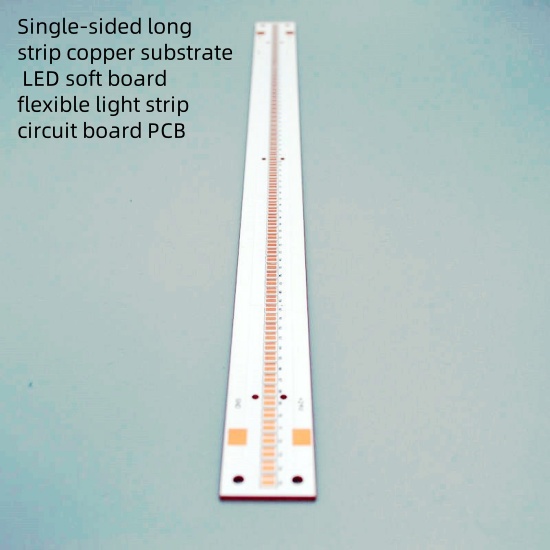
Thickness: The thickness of the copper-based PCB can be selected according to application requirements, with common thicknesses including 1/3oz, 1/2oz, 1oz, 2oz, and 3oz.
Roughness: The roughness of the copper foil has a significant impact on the PCB's electrical performance and soldering quality, with common roughness levels including standard copper foil (STD), reverse treated foil (RTF), very low profile foil (VLP), and high very low profile foil (HVLP).
Thermal Conductivity: Copper-based PCBs exhibit excellent thermal conductivity with a high thermal conductivity coefficient, making them suitable for high-frequency circuits, areas with large temperature fluctuations, and precision communication equipment that requires effective heat dissipation.
Surface Treatment: Common surface treatment processes include hot air soldering leveling (HASL), electroless nickel immersion gold (ENIG), organic solderability preservative (OSP), immersion silver (Immersion Ag), and immersion tin (Immersion Tin), which improve the material's solderability and oxidation resistance.
Application Areas
Copper-based PCBs are suitable for high-frequency circuits, high-power circuits, communication equipment, automotive electronics, medical equipment, and other fields where high requirements for thermal dissipation, electrical performance, and mechanical performance are necessary.
+8618822809251
Website:www.huashing-pcb.com
Address:No. 1 Xinhe Avenue, 8th Industrial Zone, Gonghe Community, Shajing Sub-District Office, Bao'an District, Shenzhen .
