Site Search


Contact: Mr Yuan
Mobile:18822809251
Tel:+86-0755-2314670
QQ:2144782477
e-mail:szhsxpcb@126.com
Address:No. 1 Xinhe Avenue, 8th Industrial Zone, Gonghe Community, Shajing Sub-District Office, Bao'an District, Shenzhen .
The Development Trend of Circuit Boards and Selective Soldering
A noticeable trend in the development of PCB (Printed Circuit Board) technology is the adoption of reflow soldering. Traditionally inserted components can now also be soldered using reflow techniques, known as through-hole reflow soldering. The advantage is that all solder joints can be completed simultaneously, minimizing production costs. However, temperature-sensitive components limit the application of reflow soldering, whether for inserted or SMD (Surface Mount Device) components. Attention has thus turned to selective soldering. In many applications, selective soldering is used after reflow soldering as an effective solution. The process characteristics of selective soldering can be understood by comparing it with wave soldering.
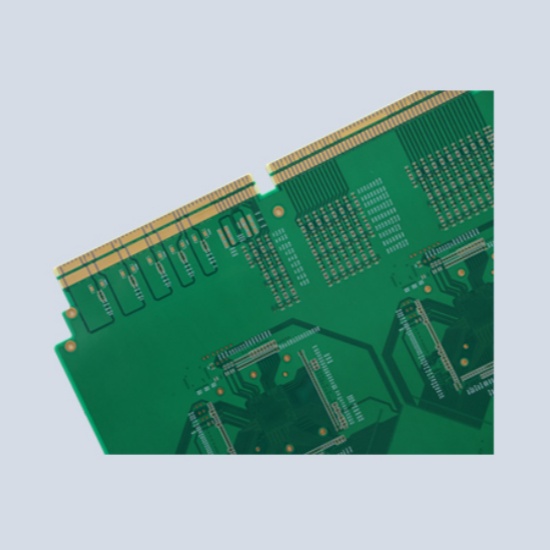
Process Characteristics of Selective Soldering
The most significant difference between wave soldering and selective soldering is that in wave soldering, the bottom of the PCB is fully immersed in liquid solder, whereas in selective soldering, only specific areas come into contact with the solder wave. Since PCBs are poor thermal conductors, adjacent components and solder joints on the PCB are not heated and melted during soldering. Flux must also be applied before soldering. Compared to wave soldering, where flux is applied to the entire PCB, in selective soldering, it is only applied to the areas to be soldered on the bottom of the PCB. Additionally, selective soldering is only suitable for soldering inserted components. Selective soldering is a new method, and a thorough understanding of the process and equipment is essential for successful soldering.
Workflow of Selective Soldering
The typical workflow of selective soldering includes flux application, PCB preheating, dip soldering, and drag soldering.
Process Characteristics and Workflow Introduction of Selective Soldering for PCB Circuit Boards
Preheating Process
Flux Application Process
In selective soldering, the flux application process plays a crucial role. During soldering and at the end of the process, the flux should have sufficient activity to prevent bridging and oxidation of the PCB. The PCB is carried by an X/Y robotic arm over the flux nozzle, where flux is sprayed onto the areas to be soldered. Flux application methods include single-nozzle spray, micro-hole jet, and simultaneous multi-point/pattern spray. For selective soldering after reflow, accurate flux application is essential. The micro-hole jet method ensures that areas outside the solder joints are not contaminated. The minimum diameter of the flux pattern for micro-dot spraying is greater than 2mm, so the positional accuracy of the flux deposited on the PCB is ±0.5mm to ensure that the flux always covers the area to be soldered. The tolerance for the amount of flux applied is provided by the supplier, and the technical specifications should define the flux usage, typically with a recommended safety tolerance range.
Soldering Process
There are two different processes in selective soldering: drag soldering and dip soldering.
Selective drag soldering is performed on a single small solder wave nozzle. Drag soldering is suitable for soldering in very tight spaces on the PCB, such as individual solder joints or pins, and single rows of pins. The PCB moves across the solder wave at different speeds and angles to achieve optimal soldering quality. To ensure process stability, the inner diameter of the solder nozzle is less than 6mm. After determining the flow direction of the solder, the nozzle is installed and optimized in different directions for various soldering needs. The robotic arm can approach the solder wave from different angles between 0° and 12°, allowing users to solder various components on electronic assemblies. For most components, a 10° tilt angle is recommended.
Compared to dip soldering, the movement of the solder and the PCB in drag soldering results in better heat transfer efficiency during soldering. However, the heat required to form the solder joint is transferred by the solder wave. Due to the small mass of the single-nozzle solder wave, a relatively high solder temperature is necessary to meet the requirements of drag soldering. For example, a solder temperature of 275°C to 300°C and a drag speed of 10mm/s to 25mm/s are generally acceptable. Nitrogen is supplied to the soldering area to prevent oxidation of the solder wave, eliminating oxidation and preventing bridging defects in the drag soldering process, which enhances the stability and reliability of the process.
The machine features high precision and flexibility, with a modular design that can be fully customized according to specific customer production requirements and upgraded to meet future production needs. The robotic arm's range of motion covers the flux nozzle, preheating, and solder nozzle, allowing the same equipment to perform different soldering processes. The machine's unique simultaneous processing significantly shortens the production cycle for individual boards. The robotic arm's capabilities provide this selective soldering machine with high precision and high-quality soldering characteristics. Firstly, the robotic arm's highly stable and precise positioning ability (±0.05mm) ensures highly consistent production parameters for each board. Secondly, the robotic arm's 5-axis movement allows the PCB to contact the solder surface at any optimized angle and orientation, achieving optimal soldering quality. The solder wave height measurement probe installed on the robotic arm's clamping device, made of titanium alloy, periodically measures the solder wave height under program control and adjusts the solder pump speed to control the solder wave height, ensuring process stability.
Despite these advantages, the single-nozzle solder wave drag soldering process has limitations: soldering time is the longest among the three steps of flux application, preheating, and soldering. And since solder joints are drag-soldered one by one, the soldering time increases significantly with the number of solder joints, making it unable to compete with traditional wave soldering in terms of efficiency. However, this situation is changing, as multi-nozzle designs can maximize production output. For example, using dual soldering nozzles can double production. Similarly, dual nozzles can be designed for flux application.
The immersion selective soldering system has multiple solder nozzles, each designed to correspond to a specific solder point on the PCB. Although it is less flexible than the robotic arm type, its production capacity is comparable to traditional wave soldering equipment, and the equipment cost is relatively lower. Depending on the PCB size, single or multiple boards can be conveyed in parallel, and all solder points will complete flux application, preheating, and soldering simultaneously. However, due to the different distribution of solder points on different PCBs, dedicated solder nozzles need to be made for each PCB. The size of the solder nozzles should be as large as possible to ensure process stability without affecting adjacent components on the PCB. This is important but challenging for design engineers, as process stability may depend on it.
Using the immersion selective soldering process, solder points from 0.7mm to 10mm, short pins, and small-size pads can be soldered more stably, with a lower likelihood of bridging. The distance between adjacent solder point edges, components, and solder nozzles should be greater than 5mm. The primary purpose of preheating in selective soldering is not to reduce thermal stress but to remove solvents and pre-dry the flux, ensuring the flux has the correct viscosity before entering the solder wave. The heat from preheating is not a critical factor affecting soldering quality. Preheating temperature settings are determined by PCB material thickness, component package specifications, and flux type. There are different theoretical explanations for preheating in selective soldering: some process engineers believe that the PCB should be preheated before flux application, while others argue that preheating is not necessary and soldering can be performed directly. Users can arrange the selective soldering process according to specific circumstances.
+8618822809251
Website:www.huashing-pcb.com
Address:No. 1 Xinhe Avenue, 8th Industrial Zone, Gonghe Community, Shajing Sub-District Office, Bao'an District, Shenzhen .
