
Your current location :Home>>News>>Encyclopedia of the Company's PCB Products

Contact UsContact Us

Contact: Mr Yuan

Mobile:18822809251

Tel:+86-0755-2314670

QQ:2144782477

e-mail:szhsxpcb@126.com

Address:No. 1 Xinhe Avenue, 8th Industrial Zone, Gonghe Community, Shajing Sub-District Office, Bao'an District, Shenzhen .

What is important for the BGA fanout of SBU structures

2025-03-14
98

Ball Grid Array (BGA) is a popular packaging technology for integrated circuits that enables a high pin count and compact design. Compared to traditional pin connection methods, BGA offers better thermal and electrical performance. A critical aspect of using BGA is the fanout design, which describes the connection of the pins of the BGA chip to the traces of the printed circuit board (PCB).


What is BGA fanout?

The term Fanout refers to the method of routing the electrical connections from the ball terminals of a BGA chip to the traces on the PCB. Since the BGA pins are placed under the chip, the design requires special methods and approaches to make these connections effective and reliable.

Important considerations for the BGA fanout design

Pad design and spacing:
The pads that are connected to the balls of the BGA must be precisely positioned. The distance between the pads must be sufficient to avoid short circuits and ensure a reliable solder connection.

Via types and placement:
Plated-through vias (through-hole vias): These vias penetrate the entire PCB and connect all layers with each other. They are easy to manufacture, but can take up more space.
Blind vias (blind vias): These vias only connect the outer layer to one or more inner layers without penetrating the entire PCB. They save space and are often used in HDI (High-Density Interconnect) PCBs.
Buried vias (buried vias): These vias are located entirely within the inner layers of the PCB and are not visible from the outer layers.

Conductor routing:
The conductor tracks must be routed in such a way that they do not cross each other and have sufficient distance between them to avoid short circuits. Tighter routing techniques, such as microvias and thinner traces, are often necessary for BGAs with high pin density.
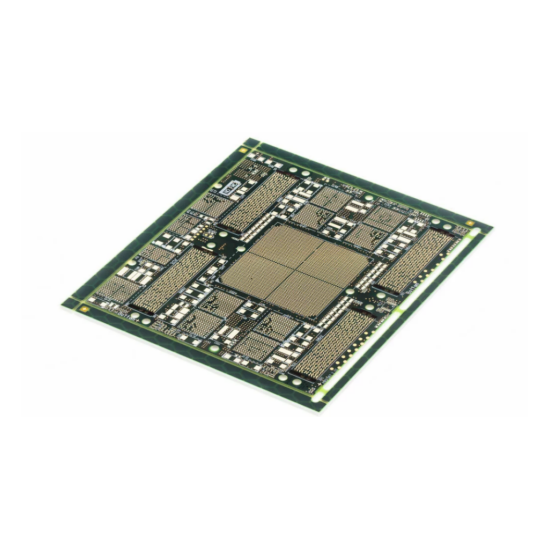
Multilayer-HDI-SBU-26-Lagen-2-1024x576_副本.png


Steps to create an optimized design


  1. Select design software

  2. Study component data sheet

  3. Design pad and via layout

  4. Routing conductor paths

  5. Apply design rules

  6. Simulation and verification

  7. Prototype production and testing

For point "3. Design pad and via layout", our Digital Design Compass with the articles

3.1.1 HDI/SBU circuit board 
16.2 Design solutions | BGA

Valuable decision-making aids for the minimum necessary layer structure and the minimum necessary viatypes, which ultimately has an impact on cost efficiency Design to Cost

Added value of an optimized BGA fanout

High connection density

Error avoidance
A carefully designed BGA fan-out design reduces the risk of soldering errors and mechanical problems. This reduces the failure rate and increases the reliability of the PCB, which is particularly important in safety-critical applications.

Thermal management
Heat can be dissipated more efficiently through the targeted placement and design of vias and conductor paths. This extends the service life of the components and increases the reliability of the entire system.

Cost efficiency

Reduced rework and downtime
Avoiding design errors reduces the cost of rework and warranty claims. This leads to lower overall costs and higher customer satisfaction due to less downtime.

Efficient use of the PCB area
A good fanout design allows for a more optimal use of PCB space, which can reduce manufacturing costs as less material is required.


Contacts

Service hotline

188-2280-9251

Website:www.huashing-pcb.com

Address:No. 1 Xinhe Avenue, 8th Industrial Zone, Gonghe Community, Shajing Sub-District Office, Bao'an District, Shenzhen .