Site Search


Contact: Mr Yuan
Mobile:18822809251
Tel:+86-0755-2314670
QQ:2144782477
e-mail:szhsxpcb@126.com
Address:No. 1 Xinhe Avenue, 8th Industrial Zone, Gonghe Community, Shajing Sub-District Office, Bao'an District, Shenzhen .
Can Domestic 90nm Lithography Machines Be Used to Produce 14nm Chips? Theoretically Yes, Practically No
Currently, the most advanced lithography machine that has been put into mass production in China is the 90nm lithography machine. Although technological breakthroughs have been made in 28nm lithography machines, they are still in the testing phase due to relatively low yield rates and have not yet entered mass production. Some netizens may have bold ideas about this: Can we use purely domestically produced 90nm lithography machines to manufacture 14nm chips?
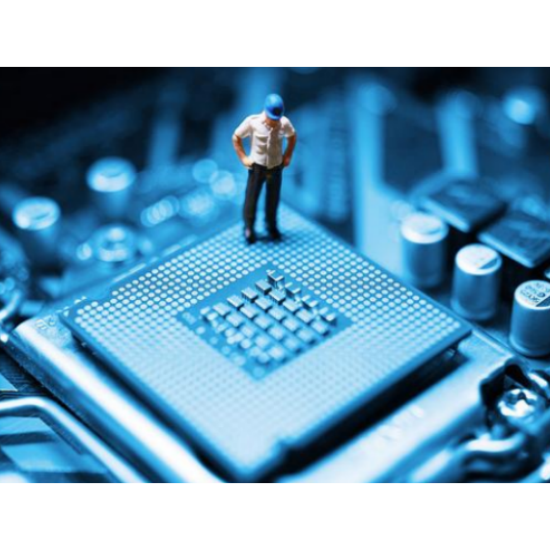
First of all, let me tell you the answer for sure: No.
Some people may say that it is possible to produce 14nm chips using a 90nm lithography machine through process improvements and multiple exposures. However, this is only a theoretical ideal, and it is not feasible in reality.
Let me first provide you with a basic common sense: the wavelength and precision of a lithography machine are two different things.
When we talk about the process of a lithography machine, we usually refer to its precision, or resolution. For example, a domestically produced 90nm lithography machine has a resolution of 90nm.
However, in reality, the wavelength of a 90nm precision lithography machine is not 90nm, but much larger than that.
Currently, there are two types of lithography machines on the market: EUV lithography machines and DUV lithography machines. Only ASML in the Netherlands has mastered the technology of EUV lithography machines, and no other country has.
Currently, domestically produced lithography machines are DUV lithography machines, which use excimer lasers as their light sources. Depending on the technology, the wavelengths of DUV lithography machines can be divided into 365nm, 248nm, 193nm, and equivalent to 134nm.
The wavelength of the current domestically produced 90nm DUV lithography machine should be between 193nm and 248nm.
So why do we say that domestically produced lithography machines have reached 90nm? In addition to wavelength, precision is also achieved through objectives and light sources.
However, there are significant challenges with domestically produced objectives and light sources. The world's top producers of objectives and light sources, such as Zeiss in Germany and Cymer in the United States, are unlikely to export their most advanced products to us. It will be difficult to achieve an improvement in lithography machine precision solely through domestic suppliers in the short term.
Therefore, it is almost impossible to use domestically produced lithography machines to manufacture 14nm chips. If it were possible, we wouldn't be so troubled now.
Some people may say that multiple exposures using a 90nm lithography machine can also produce 14nm chips. However, many people may overlook several issues here.
The first issue is cost.
If a 90nm lithography machine is used to produce 14nm chips through multiple exposures, the cost will increase rapidly, possibly several times that of ordinary 14nm chips. The resulting chips will have no market advantage, and companies are unlikely to engage in such a losing business.
The second issue is yield rate.
Even if China manages to produce 14nm chips using a 90nm lithography machine through various efforts, the yield rate will not be high. A yield rate of 10% would be considered very good. Such a low yield rate not only significantly increases costs for companies but also raises the question of whether any manufacturers will be willing to purchase these chips.
Therefore, considering various factors, it is basically impossible to use domestically produced 90nm lithography machines to manufacture 14nm chips.
Currently, the only hope is that once domestically produced 28nm lithography machines enter mass production, they may indeed be used to produce 14nm or even 7nm chips.
Domestically produced 28nm lithography machines have already achieved technological breakthroughs and are currently in the testing phase. According to Shanghai Micro Electronics' original plan, they were supposed to enter mass production by the end of 2022. However, based on the current progress, it is unlikely to achieve mass production in the short term, possibly not until 2023 or even 2024.
But since China has already achieved technological breakthroughs in 28nm lithography machines, mass production of 28nm lithography machines will eventually come.
Once China masters mature 28nm lithography machines, combined with improvements in chip manufacturing processes and multiple exposures, they can indeed be used to produce 14nm or even 7nm chips.
It's worth noting that TSMC's first-generation 7nm chips were also produced using DUV lithography machines. They used ASML's ARFi model DUV lithography machines, which have a maximum resolution of 38nm.
It is said that the new generation of lithography machines developed by Shanghai Micro Electronics also has a maximum resolution of 38nm. Therefore, there is indeed a good chance that they can be used to produce 14nm and 7nm chips.
Of course, in addition to relying on advancements in lithography machine technology, there is currently another approach to improving chip performance on the market: chip stacking. This involves stacking two chips together to enhance their performance. This approach has been proven to be feasible.
+8618822809251
Website:www.huashing-pcb.com
Address:No. 1 Xinhe Avenue, 8th Industrial Zone, Gonghe Community, Shajing Sub-District Office, Bao'an District, Shenzhen .
