Site Search


Contact: Mr Yuan
Mobile:18822809251
Tel:+86-0755-2314670
QQ:2144782477
e-mail:szhsxpcb@126.com
Address:No. 1 Xinhe Avenue, 8th Industrial Zone, Gonghe Community, Shajing Sub-District Office, Bao'an District, Shenzhen .
Production Process of Rigid-Flex Circuit Boards
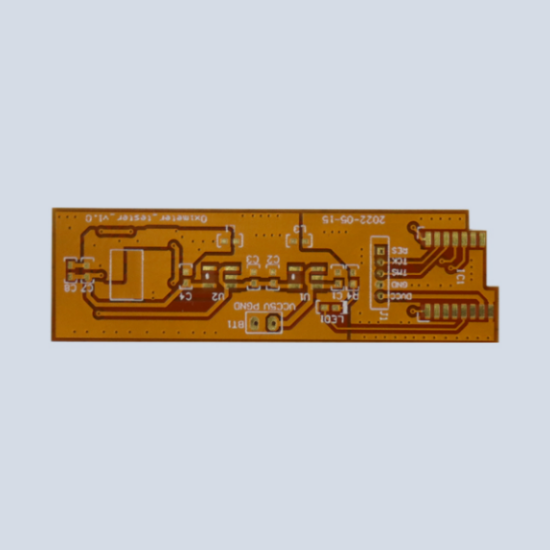
The production process of rigid-flex circuit boards is detailed as follows:
01 Design Board Inspection
The engineering department of the factory receives and inspects the design board files sent by the customer.
The inspection includes checking whether the design files are appropriate, whether any layers are missing, ensuring that the files have borders, and whether the drilling files are present, etc.
If there are defects in the design, the engineering department will notify the designer to make modifications. If there are no design issues, mass production can proceed according to the design.
02 Printing the Design onto Transparent Film
The inspected design files are printed onto transparent film.
Light is projected onto these films to expose the photoresist on the circuit board in a manner similar to exposing a photograph. This circuit board design is like a movie, vivid and particularly lifelike.
03 Cutting and Edge Grinding of Glass Fiber
Select the glass fiber and cut and polish it.
Choose FR-4 type glass fiber with copper plating on the top and bottom layers, and then cut it to the design dimensions on a cutting machine. Since the edges of the glass fiber are too rough, we need to polish them.
04 Inner Layer Fabrication
The top and bottom layers of the glass fiber are covered with plastic dry film and hardened under ultraviolet light.
After the dry film on both sides of the glass fiber is hardened, they are pressed together by a machine, effectively preventing the copper from being dissolved by alkaline liquids in subsequent processes.
05 Etching Process
The purpose of the entire etching process is to remove the excess copper and photoresist from the copper plate, completing the prototype of the PCB board through a series of processes.
Remove the excess copper and photoresist from the interlayer glass fiber, complete the etching process by immersing and washing with an alkaline solution, and finally complete the entire etching process through stripping, washing, drying, and dry film combination.
06 Automated Optical Inspection (AOI) and Vacuum Lamination (PP)
The purpose of automated optical inspection is to check the etching of the inner layers and ensure that the etching of the inner layers is all correct.
Vacuum lamination involves attaching yellow epoxy resin-like patches to the sides of the board to increase adhesion.
+8618822809251
Website:www.huashing-pcb.com
Address:No. 1 Xinhe Avenue, 8th Industrial Zone, Gonghe Community, Shajing Sub-District Office, Bao'an District, Shenzhen .
